.png)

A few years ago, I remember sitting in a meeting at work when a colleague calmly said, “I’m sorry, I don’t have time for that right now.” At the time, I found it jarring. I thought, surely, we should always say yes, step up, and help wherever we can. Saying no felt almost wrong — like a personal failing.
But over the years, I have learned that saying yes to everything doesn’t make us stronger; it exhausts us. It drains our energy, erodes our focus, and leaves us with little resilience to cope with the things that really matter. I have seen it in my own life — the late nights trying to meet every request, the anxiety that creeps in when my schedule is overloaded, and the quiet frustration that builds when I realise, I have said yes at the expense of my well-being.
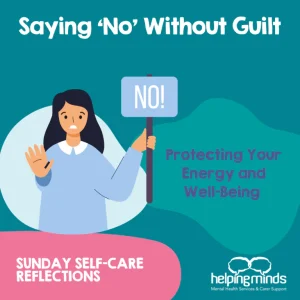
Learning to say no has been transformative, but it hasn’t been easy. There is a natural tension — a mix of guilt, fear of disappointing others, and the internalised belief that being helpful or accommodating defines our worth. What I’ve come to understand is that saying no isn’t selfish; it’s necessary. It’s a way of protecting your energy so you can show up fully where it matters most — at work, with family, and for yourself.
Science supports this. Research in psychology and neuroscience shows that setting boundaries reduces stress, prevents burnout, and increases our capacity for focus and creativity. When we overcommit, our brains are constantly juggling multiple tasks, which increases cognitive load and emotional exhaustion. Saying no allows our brain and body to recover, helps us prioritise, and improves our overall performance and well-being. In essence, boundaries create resilience.
I’ve also found that saying no can strengthen relationships rather than weaken them. When we communicate our limits with honesty and respect, people often respond with understanding. It sets a tone of mutual respect and encourages others to reflect on their own boundaries too. Over time, it becomes less about guilt and more about clarity — a recognition that our energy is finite and valuable.
I still remember the first time I said no without apology. It was uncomfortable, but when I stepped back, I realised that everything I had said yes to before wasn’t necessarily urgent or essential. I felt a wave of relief, a sense of calm I hadn’t experienced in months. That day I truly understood that self-care isn’t indulgent; it’s protective. It ensures that we have the energy, focus, and resilience to keep going without running ourselves into the ground.
Saying no is an act of courage and compassion — for ourselves and for others. It allows us to live with intention, choosing where to invest our energy rather than reacting to every demand. It’s a small word with enormous power and learning to use it wisely has been one of the most important lessons in my journey toward balance, presence, and well-being.