.png)

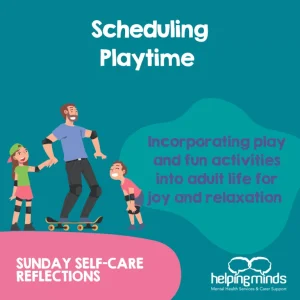
After watching my young grandchildren play this week, I’ve been reflecting a lot. It hit me that as adults, we often lose touch with play. We get caught up in the hustle and bustle of adult lifework, family, bills, and all those other things that just keep piling up. We swap playgrounds for boardrooms, laughter for deadlines, and before we know it, the idea of “playtime” feels like a distant memory.
I’ve been noticed how much we lose when we stop making space for joy. I’ve realised that play isn’t something we grow out of — it’s something we forget to schedule. And that’s a shame, because play isn’t childish. It’s deeply human.
When we let ourselves play — really play — we give our minds and bodies a break from being in constant “doing” mode. There’s science behind this too. Neuroscientists like Dr. Stuart Brown have found that play releases endorphins, boosts creativity, and helps regulate our emotions. It reduces stress and strengthens our relationships. Essentially, it helps us remember how to feel good again — naturally.
I was reminded of this recently while kicking a football with my grandson. At first, I was just watching him — that boundless energy, the pure delight in chasing the ball with no purpose other than fun. Then he called out, “Come on, Grandma, your turn!” So, I joined in. Within minutes, I was laughing, chasing the ball, and — to my own surprise — pulling out a few of my old soccer tricks. In that moment, I wasn’t thinking about work or what was next on my list. I was just there — present, happy, and connected. It reminded me that even though I’m older, that playful part of me hasn’t gone anywhere. It just needed a gentle nudge to come out again.
And you know what happens when I make time for those moments? I feel lighter. More grounded. More me. Play reconnects me with the part of myself that isn’t a mum, a grandma, a CEO, or a carer — just Debbie. The one who laughs easily, gets curious, and feels joy for no reason other than being alive.
For anyone who spends most of their time giving to others — and I know many of us do — play isn’t selfish. It’s how we refill our emotional cup. When we give ourselves permission to have fun, we’re also giving others permission to do the same. It reminds our families, our teams, and our communities that self-care isn’t just about rest — it’s about joy.
So maybe the challenge is this: don’t wait until you’re burnt out to start playing again. Put “playtime” in your diary and treat it like something that matters — because it does.
Life is serious enough without us taking ourselves too seriously. Sometimes, the best thing we can do for our wellbeing is to laugh, dance, and find a reason — any reason — to play. Because in those moments, we’re not escaping life; we’re truly living it.