.png)

This opinion piece appeared in The West Australian on November 24 2025. By Deborah Childs CEO HelpingMinds.
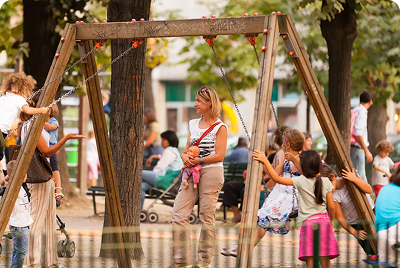
In a playground in north Perth, something deeply unsettling recently unfolded. A mother in recovery from alcohol use, diligently rebuilding her life, felt dizzy from vertigo. Instead of being offered a simple “Are you OK?” she was accused of drinking again.
Another mother in another playground, this time some decades ago, was a single parent struggling to keep things together. She found herself surrounded and judged by a clique of women who deemed her “not their kind”. Others stood by, watching, some whispering, yet no one intervened.
These weren’t children misbehaving in a school playground, these were adult women, mothers, in a space designed for play, safety and connection.
Playground bullying is a persistent topic of discussion, but we often focus on children. We encourage our children to avoid the very behaviours adults are demonstrating: exclusion, cruelty, gossip, and the desperate need to belong, regardless of the harm caused. The “mean girls” of high school haven’t vanished; they’ve simply graduated and become mothers themselves.
It seems many have lost their compassion, if, I wonder, they ever possessed it.
Imagine being a young mother in early recovery from alcohol dependence — a journey demanding immense strength, vulnerability, and support — and finding yourself the target of playground speculation fuelled by stigma.
Imagine navigating life as a single mother, perpetually exhausted and usually overwhelmed, realising the whispered judgment around you is louder than any offer of help. It’s almost as if the other mothers believe divorce or alcohol abuse is contagious!
Why does someone else’s hardship become a topic of gossip rather than an opportunity to stand by them and offer kindness and support?
I believe part of the answer lies in the fear of missing out, stress, disconnection and a broader cultural shift. As Australians, we often think of ourselves as laid-back, friendly and always willing to lend a hand. However, our communities have become more fragmented, social supports are thinner and pressures are heavier. Feeling insecure, people sometimes protect themselves by aligning with a group, even if it means excluding others and causing harm.
This costs those targeted and weakens the entire community.
Research consistently shows that human connection is a protective factor for mental health and wellbeing.
Humans are wired for belonging, and relational recovery — the idea that we heal through safe, supportive relationships — is evidence-based. When people feel seen, valued and included their stress levels drop, resilience increases and their chances of thriving improve.
Conversely, environments filled with gossip, exclusion and suspicion erode trust and heighten anxiety. Children are particularly perceptive and absorb these dynamics. They notice cold shoulders, pointed looks, overheard lies and gossip and tight circles that remain closed. How can we encourage kindness and empathy in our children while modelling the opposite with other adults in the very spaces where they learn about the world?
The good news is rebuilding kindness doesn’t require grand gestures. It begins with small, human acts like waving, smiling or inviting someone to join a conversation. Asking, “Are you OK?” instead of assuming the worst, offering help and choosing curiosity over judgment are all important. Remembering that everyone carries something is also crucial. Communities thrive not through uniformity but through generosity. By reaching out rather than pulling away, assuming good intentions rather than looking for failings, we can repair the social fabric that supports our mental wellbeing.
Playgrounds should be places of laughter and fun, not dread. They should be safe for children and for the adults who care for them.
If mums can’t feel safe around other mums, what hope do we have of building kinder communities for the next generation?
The mums who were targeted last week and a few years ago didn’t deserve the treatment they received. None of us do. We all deserve — and need — something far better.
If we want our children to grow up kinder, we must show them what kindness looks like.
It starts in the playground. It starts with us.